

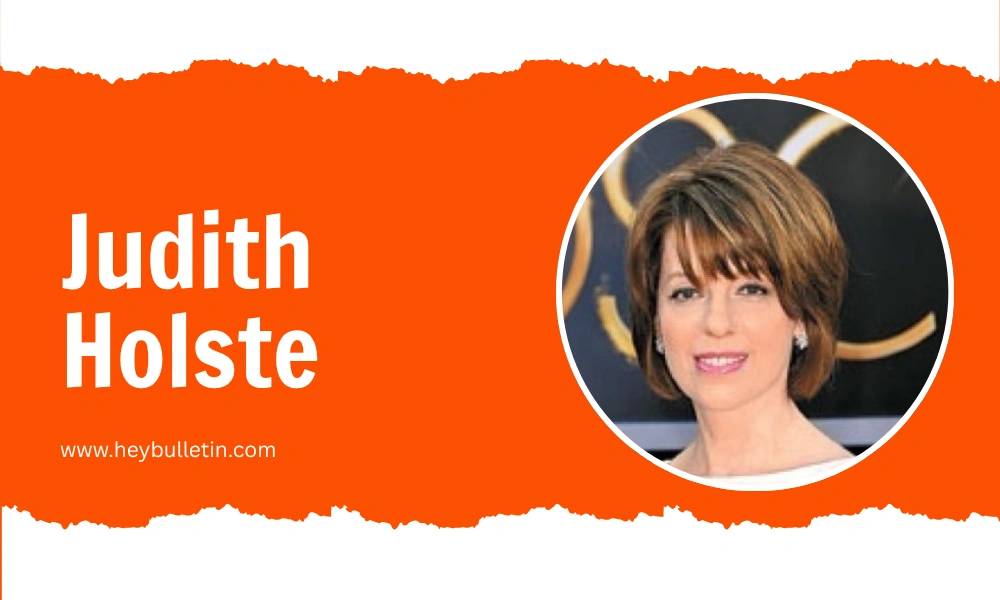
Judith Holste is a name that gets searched constantly, yet very little about Judith Holste is actually documented in public. This post pulls together what’s verifiably known about Judith Holste, her career, her credits, and her marriage, while separating fact from the speculation that tends to fill the gaps.
If you’ve asked the name Judith Holste, odds are you didn’t stumble onto her by way of her own work. You found her because she’s married to Christoph Waltz, the Austrian actor who became a global star after winning two Academy Awards for his roles in Quentin Tarantino’s Inglourious Basterds and Django Unchained, and who later played a memorable villain in the James Bond film Spectre. That’s the usual path into this story, and it’s a reasonable one. But it’s worth pausing on that path for a second, because it says more about how fame works than it does about who Judith Holste actually is.
Holste is a German costume designer. That’s her profession, her craft, and by most accounts the thing she’d rather be known for, if she had to choose. She has spent years working in film, television, and theater, the kind of work that shapes what audiences see on screen without ever putting her name in the spotlight. She has also, deliberately and consistently, kept her personal life out of public view. That combination, a real career of her own, paired with a strong preference for privacy, makes her a genuinely interesting case study in how the internet treats people who are adjacent to celebrity rather than celebrities themselves.
This post looks at what’s actually known about Judith Holste: her work as a costume designer, her documented credits, and the broad facts of her relationship with Christoph Waltz that have been reported by entertainment outlets. It also flags where public curiosity outpaces public information, because with someone this private, that gap is part of the story too.
Judith Holste’s Career Built Behind the Camera
Costume design is one of those film crafts that most audiences never think about directly, even though it does an enormous amount of storytelling work. The right costume tells you who a character is before they say a word, their era, their class, their state of mind, their relationship to the people around them. It’s a discipline that rewards precision, historical knowledge, and a kind of collaborative invisibility: the best costume work often doesn’t call attention to itself at all. It just feels right.
That’s the world Judith Holste has worked in for decades. Her credits include productions such as Wolffs Revier, a German television crime drama from the early 1990s; Schimanski, another well-known German TV crime series; Fugitives (2011); and Shores of Hope (2012). These are the kinds of German-language television and film productions that rarely get much international press coverage, even though they represent steady, serious work within the German entertainment industry. Crime dramas and character-driven television series depend heavily on costume design to establish tone and credibility, and a career built across several of them suggests someone who has built a real, sustained professional reputation in that world, not a one-off credit or a passion project, but an ongoing career.
It’s also worth noting what this kind of career looks like from the inside of an industry, as opposed to how it looks from outside. Costume designers on television productions, especially long-running series, are often part of a small, consistent team that works together across many seasons or many related projects. Being trusted with that kind of recurring role is itself a signal of professional standing, production teams don’t repeatedly hire designers whose work isn’t reliable. So while Holste’s costume design credits might not be widely discussed by casual moviegoers, within the more specific context of German television and film production, they represent a legitimate and apparently respected body of work.
How Judith Holste Met Christoph Waltz
The publicly reported version of events is that Holste and Waltz became involved in the late 1990s, after his first marriage, to an American psychotherapist, had ended. Waltz’s career at that point looked very different from what it would become. He was a working actor primarily known within German and Austrian television and theater, not yet the Hollywood figure he’d become after 2009’s Inglourious Basterds turned him into an internationally recognized name almost overnight.
That timing matters for understanding the relationship, at least as it’s been publicly described. Holste and Waltz’s connection predates his global fame by roughly a decade. Whatever their relationship has been built on, it wasn’t built on the version of Christoph Waltz that most of the world now recognizes, the Oscar winner, the Bond villain, the internationally in-demand character actor. It was built earlier, when he was simply a working actor in the German entertainment industry, the same industry Holste herself was building a career in.
According to reporting on the couple, Waltz didn’t publicly confirm the marriage until 2013, even though the two are believed to have married considerably earlier than that. That gap between the actual event and the public confirmation of it is itself telling. It reflects a pattern that seems to run through the whole relationship: doing things privately, on their own timeline, and making them public, if at all, well after the fact and largely on their own terms.
The couple share one daughter together, born in 2005. Holste is also stepmother to Waltz’s three children from his first marriage. Blended families of this kind come with their own complexities, and the fact that so little is known about how theirs functions is, again, consistent with a couple that has simply chosen not to make those details available for public consumption.
Why Judith Holste Keeps a Notably Private Public Life
If there’s a defining theme in everything written about Judith Holste, it’s this: she doesn’t participate in the machinery of celebrity visibility, and neither, by extension, does her marriage. Waltz himself has a reputation for being fairly guarded about his personal life relative to many of his Hollywood peers, he gives plenty of interviews about his work and his craft, but rarely opens up about his family in the way that some actors do as a matter of course, whether for magazine profiles or red-carpet small talk. Holste’s approach seems to be the same, if not more pronounced.
She has, on occasion, appeared alongside Waltz at public events, awards shows, gallery openings, film-related benefits, the kind of appearances where a spouse’s presence is expected and photographed but where no substantive personal information is typically shared. Attending the MOCA Benefit or the LACMA Art + Film Gala, for instance, puts her in front of photographers, but it doesn’t put her in front of journalists asking about her life. There’s a real distinction between being photographed and being profiled, and Holste’s public footprint sits almost entirely on the photographed side of that line.
This matters for anyone trying to research her, because it means the actual documented record about her life is quite thin. Her film and TV credits are verifiable through industry databases. The broad outline of her marriage, when it likely began, when it was confirmed, the existence of her daughter, has been reported by entertainment outlets over the years. But beyond that, there just isn’t much. No detailed interviews. No memoir. No social media presence built around sharing her life. It’s a genuinely rare thing in an era where public figures, and people adjacent to public figures, are often expected to perform some version of openness for an audience.
Why the Internet Keeps Asking About Judith Holste
There’s an interesting tension worth naming directly: the less someone shares, the more some corners of the internet seem determined to fill in the blanks. Search for Judith Holste and you’ll find articles speculating about her age, her upbringing, her artistic destiny, her childhood influences, details presented with a confidence that isn’t backed up by any actual sourcing. Much of this reads as filler, generated to satisfy search demand rather than to convey verified information. It’s a pattern that shows up constantly around people who are famous by association rather than by their own choosing: a real absence of information gets papered over with speculative narrative, dressed up to look like biography.
It’s worth being skeptical of that kind of content, not because there’s anything wrong with being curious about Judith Holste, but because confidently stated guesses aren’t the same thing as facts, and a person who has spent decades protecting her privacy hasn’t consented to having invented details attributed to her. The honest version of her story is a shorter one than some of these pieces suggest: a German costume designer with a real, ongoing career in film and television, married to a now-famous actor since around the time before he became famous, and by all indications, someone who would simply prefer to keep the rest of her life to herself.
What Judith Holste’s Story Actually Illustrates
Step back from the specifics, and Judith Holste’s situation says something broader about fame, privacy, and how audiences relate to the people who orbit celebrities. Waltz’s rise to international stardom didn’t happen because of anything Holste did, but it did change the terms of her own privacy, whether she wanted that or not. Simply being married to someone whose career took an unpredictable, meteoric turn is enough to generate public curiosity about you, regardless of whether you ever sought that attention or built a public-facing career of your own.
That’s not a unique situation. Plenty of people find themselves the subject of public interest not because of anything they’ve done, but because of who they’re connected to. What makes Holste’s case notable is how consistently she and her husband have managed that dynamic: by simply not feeding it. No tell-all interviews, no curated social media glimpses into married life, no strategic profile pieces timed to a film release. Just a marriage that has, by design, mostly stayed out of view, with the exception of the professional credits Holste has earned entirely on her own.
There’s something to be said for that approach, especially in an entertainment culture that often treats personal disclosure as a kind of currency, something public figures are expected to trade in exchange for continued relevance or goodwill. Holste and Waltz appear to have opted out of that exchange almost entirely, at least as far as their marriage is concerned. Waltz talks about his work; Holste, when she appears at all, appears simply as a plus-one, photographed but not interviewed. It’s a quieter model of public life than we’re used to seeing from people connected to major Hollywood careers, and it seems to be one that’s worked for them for close to three decades.
Conclusion
Judith Holste is a German costume designer with a genuine, sustained body of professional work in film and television, including credits on productions like Wolffs Revier, Schimanski, Fugitives, and Shores of Hope. She has been married to actor Christoph Waltz since sometime before his career took off internationally, the two share a daughter born in 2005, and she is also stepmother to his three children from an earlier marriage. Beyond that, the reliable public record is limited, and that limitation appears to be intentional rather than accidental.
For anyone hoping to find a fuller biography, childhood details, personal reflections, an inside look at her marriage, that material simply doesn’t exist in verified form, and a fair amount of what circulates online filling that gap should be read with real skepticism. What does exist is the record of a working artist who has built a career of her own within an industry that rarely puts costume designers in the spotlight, and who has chosen, alongside her husband, to keep the rest of her life private. In an industry built on visibility, that choice is, in its own quiet way, worth noting.
Frequently Asked Questions
Who is Judith Holste?
Judith Holste is a German costume designer known for her work on productions such as Wolffs Revier, Schimanski, Fugitives, and Shores of Hope. She is also known publicly as the wife of actor Christoph Waltz.
What does Judith Holste do for work?
Judith Holste works behind the camera as a costume designer rather than performing on screen. Her professional credits are all in the costume and wardrobe department of film and television productions.
When did Judith Holste marry Christoph Waltz?
The exact date hasn’t been publicly confirmed. Reporting suggests the two became a couple in the late 1990s and were likely married for some time before Waltz publicly confirmed the marriage in 2013.
Does Judith Holste have children with Christoph Waltz?
Yes. Judith Holste and Christoph Waltz share one daughter, born in 2005. Holste is also stepmother to Waltz’s three children from his first marriage.
Why is there so little public information about Judith Holste?
Judith Holste has consistently kept her personal life private, and she and Waltz have chosen not to discuss their marriage or family in interviews. Most of what circulates online beyond her verified career and marriage details is speculation rather than confirmed fact.
