

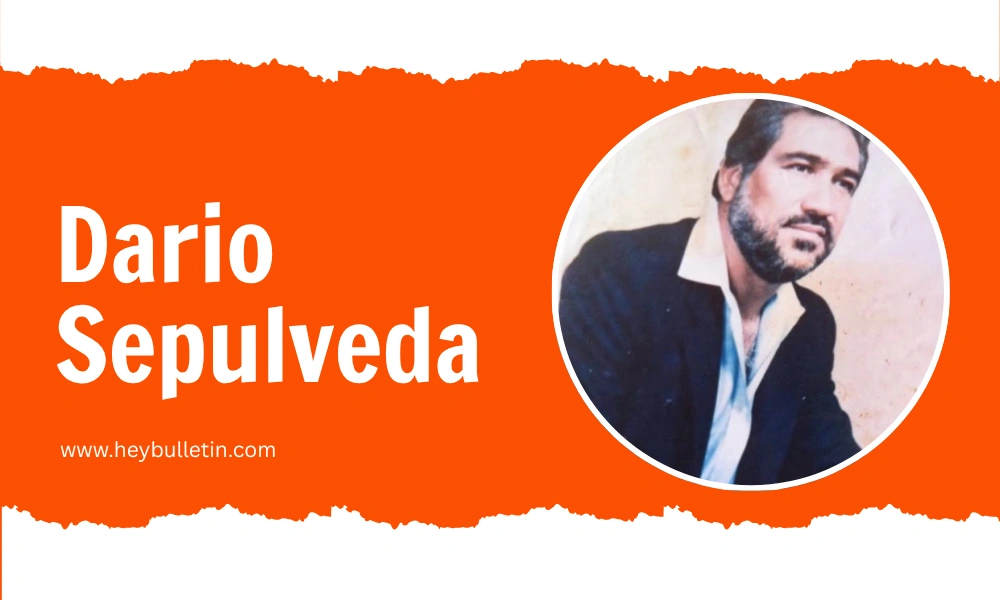
Dario Sepulveda is remembered today almost entirely through his connection to one of the most notorious figures in the history of drug trafficking, Griselda Blanco. He was her third husband, the father of her youngest son, Michael Corleone Blanco, and, according to most accounts of Blanco’s life, the victim of an assassination she is widely believed to have ordered. Sepulveda’s own story has largely been filtered through other people’s narratives: through Blanco’s criminal legend, through his son’s later interviews, and through the dramatized version of events depicted in Netflix’s 2024 miniseries Griselda. Very little independent, first-person documentation of Dario Sepulveda exists outside of that orbit, which means most of what is publicly known about him comes from secondhand reporting, court testimony from Blanco’s associates, and family recollections offered decades after his death.
What is consistently reported is that Dario Sepulveda entered Griselda Blanco’s life in the late 1970s, that the two were married in 1978, and that their relationship produced a son who would go on to become one of the more recognizable public figures connected to the Blanco family. Sepulveda was killed in Medellín, Colombia, in 1983, in front of his young son. That single, violent event has become the defining fact of his public identity, overshadowing almost everything else that might be known about who he was as a person.
Meeting Griselda Blanco
Accounts of how Dario Sepulveda and Griselda Blanco met differ somewhat depending on the source, which is worth noting given how much of the couple’s story has been retold and dramatized over the years. One version, drawn from journalist Henry Dauber’s reporting on Blanco’s life, suggests Sepulveda was sent from Colombia to the United States to meet Blanco and learn from her experience running a cocaine trafficking operation, and that the two fell for each other during that encounter. Other summaries describe him more simply as a Colombian associate who became involved with Blanco as her criminal enterprise expanded into South Florida. Some outlets have also described him as having served in a bodyguard or protection role for Blanco during this period, while other retellings frame him as an operative already embedded in trafficking networks before the two connected romantically. Because these details come from secondhand journalism and dramatized retellings rather than from Sepulveda’s own testimony, the exact circumstances of how the relationship began should be treated as reported rather than definitively established.
By most accounts, Blanco and Sepulveda married in 1978. This made him her third husband; she had previously been married to Carlos Trujillo, with whom she had three sons, and later to Alberto Bravo, a marriage that also ended in violence. Sepulveda’s arrival into Blanco’s life came at a point when her cocaine trafficking operation was already generating enormous wealth and drawing the attention of law enforcement in Miami, where much of the Blanco family’s activity was based during this era.
Marriage, Family, and the Birth of Michael Corleone Blanco
The most significant and best-documented outcome of Dario Sepulveda and Griselda Blanco’s marriage was the birth of their son. Reports place his birth in Medellin, Colombia, though sources disagree on the exact year, with some citing 1975 and others 1978; the more frequently repeated figure aligns with an early-1980s childhood timeline that would make him roughly five years old at the time of his father’s death in 1983. Blanco, said to be a devoted fan of The Godfather film series, named the boy Michael Corleone after Al Pacino’s character. That name later drew enough legal complications that it was reportedly removed from his Colombian birth certificate, according to Michael’s own later interviews.
Michael Corleone Blanco has said in various interviews that his father’s role in the family’s illegal operations has sometimes been exaggerated or altered for dramatic purposes in television portrayals. He has publicly disputed some of the narrative choices made in the Netflix series, describing certain plot elements, such as his father supposedly working for a trafficker named Fernando, as fabricated for the show rather than reflective of real events. This kind of correction from a direct family member is useful context: it’s a reminder that dramatized adaptations of Blanco’s life have taken creative liberties with Sepulveda’s story, and that Michael, as the surviving son, remains one of the only people with firsthand memory of his father, however limited that memory would have been given his young age at the time.
Tensions in the Marriage and the Move Back to Colombia
According to multiple accounts, the marriage between Sepulveda and Blanco began to deteriorate over time. Some reporting attributes the breakdown to Sepulveda’s homesickness and his desire to return to Colombia, along with his discomfort at seeing the state of Blanco’s older sons, who were reportedly illiterate despite the family’s wealth. Other accounts point to infidelity as a contributing factor, with Sepulveda allegedly having moved to Colombia in 1983 with another woman in addition to his son. These explanations are not necessarily contradictory; reporting on the couple’s separation often blends personal, financial, and custodial disputes together, but readers should understand that no single authoritative account fully reconciles every version of events.
What is more consistently reported is the custody dispute at the center of the split. After separating from Blanco, Sepulveda took their son, Michael, and relocated to Colombia. Blanco, according to the Miami New Times and later retellings drawing on that reporting, was deeply unhappy about losing custody of her youngest child. This custody conflict is treated across nearly every source as the immediate backdrop to what happened next.
The Assassination of Dario Sepulveda
In 1983, Dario Sepulveda was killed in Medellin, Colombia. According to widely repeated accounts, men dressed as police officers stopped Sepulveda’s car while he was traveling with his young son. When the men attempted to handcuff him, Sepulveda reportedly tried to run, apparently sensing that the officers were not legitimate law enforcement but hired gunmen. He was shot and killed in front of his five-year-old son, an image that has since become one of the more haunting details recounted in coverage of Griselda Blanco’s life and in dramatized portrayals of the era.
The Miami New Times has been cited repeatedly as an early and influential source on the circumstances of Sepulveda’s death, reporting that two of Blanco’s associates, former smuggler Max Mermelstein and hitman Jorge Rivi Ayala, later told law enforcement that Blanco had ordered the killing. Their accounts, given as part of broader cooperation with investigators pursuing Blanco and her network, form much of the evidentiary basis for the claim that Blanco orchestrated her husband’s death. It is worth noting, however, that this allegation, while widely repeated across documentaries, entertainment journalism, and biographical write-ups, has not been established through a criminal conviction specifically tied to Sepulveda’s murder. The claim rests primarily on testimony from associates rather than a court judgment naming Blanco as responsible for his death.
Griselda Blanco’s Alleged Involvement
The belief that Griselda Blanco ordered her husband’s assassination has become deeply embedded in the popular narrative of her life, contributing to her later nickname, The Black Widow, a label applied because all three of her husbands died violent deaths during or shortly after their relationships with her. Blanco was already suspected of killing her second husband, Alberto Bravo, by shooting him after accusing him of stealing from their operation. Her first husband, Carlos Trujillo, also died under violent circumstances associated with the same criminal world. Against that backdrop, the allegation that she had Sepulveda killed over the custody dispute and his relocation to Colombia with their son fits a pattern that biographers and documentarians have repeatedly pointed to.
Michael Corleone Blanco has offered a more complicated perspective on his mother’s alleged role. While he has not disputed that his father was killed by hired gunmen, he has at times pushed back on aspects of how the broader family story has been portrayed in media retellings, suggesting that some elements have been altered or overstated. Given that the primary sources implicating Blanco are the testimonies of criminal associates rather than a court finding specific to this case, readers evaluating the claim should treat it as a strongly supported but not judicially confirmed allegation.
Dario Sepulveda’s Portrayal in Netflix’s Griselda
Public interest in Dario Sepulveda increased substantially following the January 2024 release of Griselda, the Netflix limited series starring Sofía Vergara as Griselda Blanco. The show devoted considerable attention to Blanco’s relationship with Sepulveda, portraying their marriage as loyal and supportive before it curdled into the violence that defined its ending. Actor Alberto Guerra played Sepulveda in the series. The show’s dramatization of his death, consistent with most reporting, depicts him being gunned down by men posing as police while his young son was present.
Because the series is a dramatized adaptation rather than a documentary, some details have reportedly been altered or invented for narrative purposes. Michael Corleone Blanco, in interviews given around the show’s release, disputed certain plot points related to his father’s backstory, indicating that the writers took creative liberties in constructing scenes and relationships that did not directly mirror real events. This distinction matters for anyone researching Sepulveda: the Netflix series has done more than almost any other single piece of media to bring his story to a wider audience, but it should be understood as a dramatized interpretation layered on top of already incomplete historical reporting, rather than a strict factual record.
Life in Miami During the Height of Blanco’s Operation
The years Dario Sepulveda spent with Griselda Blanco coincided with one of the most violent and lucrative periods of the Miami cocaine trade, an era later chronicled in documentaries like Cocaine Cowboys and Cocaine Godmother. Blanco’s operation was, by most accounts, responsible for smuggling enormous quantities of cocaine into South Florida during the late 1970s and early 1980s, generating wealth that funded a lifestyle far removed from ordinary domestic life. Sepulveda’s day-to-day role within that operation is not well documented in detail; some sources describe him primarily in terms of his personal relationship with Blanco and his role as a husband and father, rather than as a central operational figure in her trafficking network. This is one of several areas where the public record is thin, and where accounts tend to focus more on his marriage and his death than on any independent business or criminal activity he may have carried out.
This period of Blanco’s life has been so heavily dramatized across multiple films, documentaries, and television series that details about the people around her, including Sepulveda, are often colored by whichever production is telling the story. Readers encountering claims about his specific responsibilities within Blanco’s network should treat unsourced or vaguely attributed details with some skepticism.
A Timeline of Key Events
Piecing together the available reporting, a rough chronology of Dario Sepulveda’s public story looks like this: he and Griselda Blanco met in the late 1970s, with 1978 cited as the year of their marriage. Their son, Michael Corleone Blanco, was born shortly afterward, in either 1975 or 1978 depending on the source. The marriage began to unravel in the early 1980s amid reported infidelity, disagreements over their son’s upbringing, and Sepulveda’s own desire to return to Colombia. In 1983, following the couple’s separation, Sepulveda relocated to Colombia with Michael, prompting a custody dispute with Blanco. Later that same year, Sepulveda was killed in Medellín by gunmen posing as police officers, with his young son present at the scene. In the decades since, his story has resurfaced primarily through interviews given by Michael Corleone Blanco and through dramatized portrayals of the Blanco family’s history, culminating most recently in the 2024 Netflix series Griselda.
Why Interest in Dario Sepulveda Has Persisted
Much of the continued public curiosity about Dario Sepulveda stems less from anything he did independently and more from his proximity to two much larger stories: Griselda Blanco’s rise and fall as one of the most infamous drug traffickers in American history, and Michael Corleone Blanco’s own public life as a reality television personality decades later. Sepulveda occupies an unusual position in that narrative, central to the emotional core of the story, since his death shaped his son’s entire childhood, but peripheral in terms of documented personal history. This combination tends to generate search interest that spikes around new media releases, such as the Netflix series or Michael’s television appearances, rather than around any genuinely new information about Sepulveda himself.
Legacy Through His Son, Michael Corleone Blanco
Dario Sepulveda’s most enduring public legacy is his son, Michael Corleone Blanco, who has become a recognizable figure in his own right, largely through his appearances on the VH1 reality series Cartel Crew and through his streetwear brand, Pure Blanco. Michael has spoken publicly, if sparingly, about the loss of his father, describing the assassination as a formative and traumatic event that shaped much of his early life. According to several biographical accounts, Michael was raised for a period by his paternal grandmother, Sepulveda’s mother, following his father’s death and while his mother’s legal and criminal circumstances remained unsettled.
Michael Corleone Blanco later reconnected with his mother and, according to multiple sources, became involved in aspects of the family’s criminal activity as a teenager before eventually distancing himself from that world following Griselda Blanco’s own murder in 2012. He has since built a public identity centered on entrepreneurship and reality television, married Marie Ramirez De Arellano, who has her own family history connected to drug trafficking, and the couple has a daughter, Faith Michelle Sepulveda, whose middle name carries her paternal grandfather’s surname forward. In interviews, Michael has expressed a desire to give his own daughter an upbringing free of the chaos and violence that defined both his mother’s and father’s lives, framing his father’s death as one of the reasons he has worked to build something different for his own family.
Separating Fact From Dramatization
Anyone researching Dario Sepulveda should be aware of a few recurring inconsistencies across the available sourcing. His marriage to Griselda Blanco is sometimes described as her second and sometimes as her third, though the weight of reporting, supported by the documented sequence of her marriages to Carlos Trujillo and Alberto Bravo before Sepulveda, favors third. His son’s birth year appears in different sources as both 1975 and 1978, a discrepancy that affects how old Michael would have been at the time of the assassination, though most narrative accounts settle on age five. And while it is widely reported that Blanco ordered Sepulveda’s killing, that claim traces back to testimony from her criminal associates rather than a court ruling specific to his murder. None of this diminishes the broader, well-corroborated arc of his story, his marriage to Blanco, the birth of their son, the custody dispute, and his violent death in Medellín in 1983, but it does mean that finer details should be read with some caution, particularly given how much of his story has passed through dramatized retellings before reaching most audiences today.
Conclusion
Dario Sepulveda’s life, in the end, is preserved almost entirely through the people and events that surrounded him: a notorious wife whose criminal legacy overshadowed nearly everyone connected to her, a son who has spent decades processing the loss of a father he barely knew, and a television adaptation that introduced his story to millions of viewers who had never heard of him before. Whatever else can be said about who Dario Sepulveda was as an individual, his death in front of his young son in 1983 remains the fixed point around which the rest of his story continues to be told. What survives of him publicly is less a biography than a set of consequences: a marriage that ended in violence, a custody dispute that preceded his death, and a son whose entire adult life has been shaped by trying to make sense of what happened to his father.
Frequently Asked Questions
Who was Dario Sepulveda?
Dario Sepulveda was the third husband of Griselda Blanco, the Colombian drug trafficker known as the Cocaine Godmother. He married Blanco in 1978, and the couple had a son together, Michael Corleone Blanco, before separating and Sepulveda’s death in 1983.
How did Dario Sepulveda die?
Sepulveda was shot and killed in Medellín, Colombia, in 1983 by gunmen posing as police officers. He was reportedly traveling with his young son at the time, and many accounts describe him attempting to flee after sensing the men were not legitimate law enforcement.
Why was Griselda Blanco suspected of killing Dario Sepulveda?
Two of Blanco’s associates, Max Mermelstein and Jorge Rivi Ayala, later told investigators that Blanco ordered the hit following her separation from Sepulveda and a custody dispute over their son. That allegation has never resulted in a conviction specifically tied to his murder.
What was Michael Corleone Blanco’s relationship to Dario Sepulveda?
Michael Corleone Blanco is Dario Sepulveda’s son with Griselda Blanco. He was present, at around five years old, when his father was killed, and he has spoken in later interviews about how that loss shaped his upbringing and his eventual break from the family’s criminal activity.
Who played Dario Sepulveda in Netflix’s Griselda?
Actor Alberto Guerra played Dario Sepulveda in the 2024 Netflix limited series Griselda, which starred Sofía Vergara as Griselda Blanco and depicted the couple’s relationship and Sepulveda’s death in some detail.
