

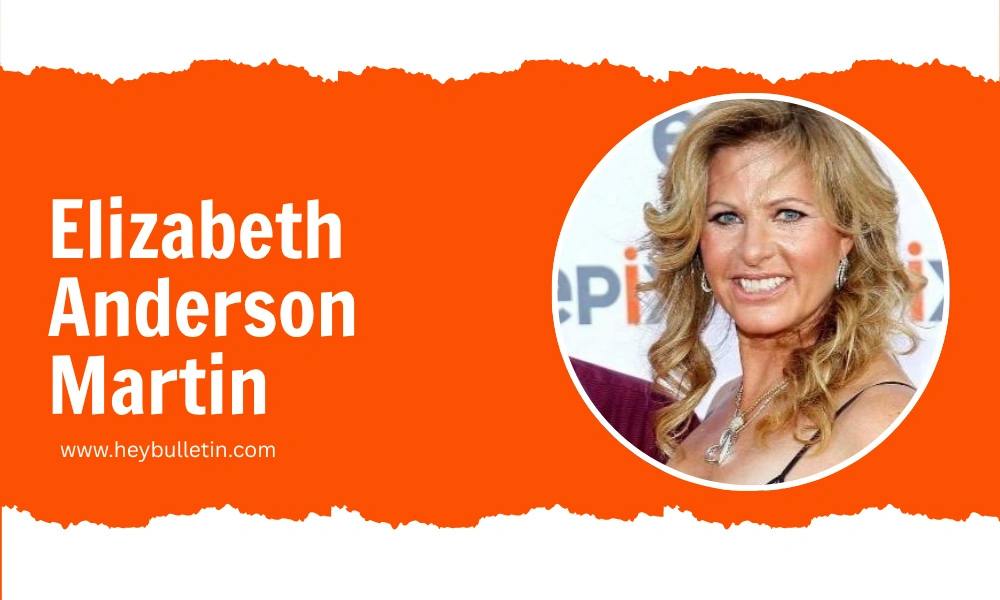
Elizabeth Anderson Martin has spent most of her adult life in two very different spotlights. For decades she was known within the American equestrian world as a skilled horse trainer, rider, and judge. Later, her name became familiar to a much wider audience as the fourth wife of actor William Shatner. Between those two chapters sits a personal history marked by a lifelong devotion to horses, a first marriage that ended in tragedy, and a public partnership that lasted nearly two decades before quietly coming apart. This is the story of Elizabeth Anderson Martin, told through what is publicly known about her life, her career, and the relationships that have shaped her public identity.
Early Life and the Beginning of a Lifelong Love for Horses
Elizabeth Anderson Martin was born Elizabeth Joyce Anderson on December 30, 1958, in the United States. Details about her parents, siblings, and childhood home have never been widely publicized, and Elizabeth Anderson Martin has generally kept that part of her biography private. What is consistently reported is that her connection to horses began remarkably early. By most accounts, she started riding at around five years old and owned her first horse by the time she was eight, a formative experience that would go on to define much of her adult life.
That early passion carried through her school years and into higher education. Elizabeth Anderson Martin enrolled at Purdue University in West Lafayette, Indiana, where she pursued a degree in equine and animal science. The choice of major reflected where her interests had already settled: not a passing childhood hobby, but a discipline she intended to build a career around. By her early teenage years, she had already begun training horses, a skill that would eventually earn her recognition well beyond amateur circles.
Growing up around horses shaped more than just a hobby for Elizabeth Anderson Martin; it shaped a discipline. Training and riding at a competitive level demands consistency, patience, and a willingness to spend long hours outdoors regardless of weather or circumstance, and by all accounts, Elizabeth Anderson Martin approached the sport with exactly that kind of commitment from a young age. This foundation, built well before she ever appeared in the public eye, is part of what makes her later career in the equestrian world feel less like a footnote and more like the central thread of her biography.
A Career Built Around Horses, Training, and Judging
Long before most people had heard the name Elizabeth Anderson Martin in connection with Hollywood, she had already built a respected career in the equestrian world. She worked as a professional horse trainer and went on to become a recognized equine judge, a role that requires years of hands-on experience and a deep, technical understanding of horsemanship. Her contributions to the sport were significant enough that she was honored with a Whinny award, a recognition given for meaningful contributions to the horse industry.
This career gave Elizabeth Anderson Martin a professional identity entirely separate from any relationship, something she has often been credited with maintaining even after she became a public figure through marriage. Her expertise in equine and animal science was not simply academic; it translated into real standing among trainers, riders, and judges who worked alongside her for years. It’s this body of work, built well before her more widely reported personal life, that continues to define Elizabeth Anderson Martin for those familiar with the equestrian community.
Later in life, Elizabeth Anderson Martin added another creative pursuit to her résumé: photography. Her interest reportedly began after a two-week safari trip alongside established photographers Joanne Kalish and Joe DiMaggio, an experience that introduced her to cameras and equipment in a hands-on setting. From there, photography became a serious pursuit rather than a passing interest, with much of her work centered on landscapes and animals, subjects that mirrored her lifelong connection to the natural world.
The transition from horse trainer and judge to photographer is not as unusual as it might first appear. Both disciplines require patience, a trained eye for detail, and an ability to read subtle movement, whether that means anticipating how a horse will respond in a training session or waiting for the right moment to capture wildlife in its natural setting. For Elizabeth Anderson Martin, photography appears to have functioned as an extension of the same instincts that made her a successful trainer, rather than as a departure from that earlier career.
Elizabeth Anderson Martin’s First Marriage to Michael Glenn Martin
Before her name became linked to William Shatner, Elizabeth Anderson Martin was married to Michael Glenn Martin. Reported accounts place the date of their marriage in November 1983, though some sources suggest the union began a year earlier, in 1982, so the exact date carries some ambiguity depending on the source consulted. What is consistently reported is that the marriage lasted until Michael’s death, though even here accounts diverge somewhat, with some placing the length of the marriage at around thirteen years and others closer to fifteen.
Michael Glenn Martin passed away on August 3, 1997, following a battle with cancer. The specific circumstances surrounding his illness have not been widely detailed in public accounts, and Elizabeth Anderson Martin has not spoken extensively about that period of her life in interviews. What can be said with more confidence is that his death marked a significant turning point in her personal story, one that preceded her much more publicly documented relationship years later.
Meeting William Shatner and a Shared Love of Horses
Elizabeth Anderson Martin met William Shatner in 2001, four years after the death of her first husband. By that point, Shatner had also experienced his own loss, having lost his third wife, Nerine Kidd, two years earlier. Their connection reportedly grew out of a shared passion for horses, a mutual interest that gave the relationship a foundation beyond Shatner’s already well-established fame. For Elizabeth Anderson Martin, horses had been a lifelong constant, and that shared world became the common ground on which her relationship with Shatner was built.
The couple married in 2001, and Elizabeth Anderson Martin became William Shatner’s fourth wife. Over the following years, she stepped into public view alongside him at industry events, charity functions, and appearances tied to Shatner’s career, even as she reportedly worked to preserve a degree of privacy around her personal life. Photographs from this era, including appearances at events like the EPIX screening of The Captains in 2011, capture Elizabeth Anderson Martin as a recognizable presence at Shatner’s side, even if she remained comparatively low-profile in interviews and press coverage.
Philanthropy and the All Glory Project
One of the more publicly documented aspects of Elizabeth Anderson Martin’s time with William Shatner is her involvement in philanthropic work centered on veterans and military families. In 2010, the couple founded the All Glory Project, an initiative aimed at supporting programs and institutions that assist military members, veterans, and their families. Elizabeth Anderson Martin’s own background in horse training played directly into this work, as the project incorporated horse therapy as part of its approach to supporting veterans.
Public appearances tied to the project, including a Wells Fargo contribution presentation held at the Shadow Hills Riding Club in Los Angeles in December 2015, show Elizabeth Anderson Martin taking an active, visible role in the charity’s mission rather than serving as a background figure. This period of her life brought together the two threads that had defined much of her adult identity: her professional expertise with horses and a more public role alongside a well-known public figure.
Television Appearances and Public Visibility
Alongside her charitable work, Elizabeth Anderson Martin made a number of television appearances during her years with Shatner, many of them tied directly to his career and public life. She has been connected to productions including E! True Hollywood Story, Life Beyond Trek: William Shatner, Gonzo Ballet, American Pickers, The Captains, and The Shatner Project. These appearances gave the wider public occasional glimpses into her life, though she largely remained a supporting presence rather than someone actively pursuing television or media attention in her own right.
This pattern, appearing when relevant to shared projects or events but otherwise staying out of the spotlight, has been described by some as a deliberate choice on Elizabeth Anderson Martin’s part to protect her personal boundaries even while married to one of the most recognizable actors of his generation. It’s worth noting that detailed, first-person accounts from Elizabeth Anderson Martin herself remain relatively scarce; much of what is publicly known comes through secondhand reporting rather than her own extensive commentary.
The End of the Marriage
After nearly two decades together, the marriage between Elizabeth Anderson Martin and William Shatner came to an end. Public reporting on the exact circumstances of their separation has been limited, and Elizabeth Anderson Martin has not offered extensive public commentary on the reasons behind the split. What is clear is that the relationship, which began over a shared love of horses in 2001, concluded after roughly eighteen years, making it the longest of Shatner’s four marriages.
The end of the marriage did not appear to significantly increase Elizabeth Anderson Martin’s public profile in the way that sometimes happens with high-profile separations. Instead, she has largely continued the same pattern of relative privacy that characterized much of her time as Shatner’s wife, with limited new public statements or appearances following the split.
Elizabeth Anderson Martin’s Legacy in the Equestrian World
Regardless of how her personal relationships are remembered, Elizabeth Anderson Martin’s standing in the equestrian community remains a significant part of her story. Her decades of work as a trainer and judge, recognized formally through honors like the Whinny award, represent a career built independently of any marriage or public relationship. For many who know her through the horse industry rather than through tabloid coverage, this professional legacy is the more defining aspect of who Elizabeth Anderson Martin is.
Her later work in photography further reflects a consistent thread running through her life: a deep connection to animals and the natural world, expressed first through training and later through a creative lens. Combined with her philanthropic contributions through the All Glory Project, Elizabeth Anderson Martin’s public record suggests someone who has used her platform, however reluctantly gained, to support causes tied to her genuine interests rather than simply to maintain visibility.
A Private Figure With a Public Story
What continues to draw interest in Elizabeth Anderson Martin’s story is the contrast between her private nature and her connection to one of entertainment’s most recognizable figures. She has managed, by most accounts, to maintain a distinct identity rooted in her own career and interests rather than being defined solely by her marriage. Her background in equine and animal science, her professional accomplishments as a trainer and judge, and her later pursuits in photography all point to a life built on personal passions that existed long before, and have continued well after, her years in the public eye.
Because much of Elizabeth Anderson Martin’s personal history has not been extensively documented in her own words, some details, including exact dates and the precise length of both of her marriages, vary somewhat depending on the source. What remains consistent across available reporting is the outline of a life shaped by horses, marked by both loss and partnership, and defined at least as much by professional accomplishment as by public association with fame.
Conclusion
Elizabeth Anderson Martin’s life resists being reduced to a single label. She is, depending on which chapter of her story is being told, a horse trainer, an equine judge, a photographer, a philanthropist, and the fourth wife of William Shatner, and none of those roles fully explains the others. Her professional grounding in equine and animal science came first and has outlasted every relationship that followed, giving her a body of work in the horse industry that stands entirely apart from her marriages. At the same time, her years with Shatner, from their shared devotion to horses to their joint work through the All Glory Project, added a more public dimension to a life that had largely been built away from cameras.
What ties these threads together is consistency rather than reinvention. Elizabeth Anderson Martin’s interests as an adult- horses, animals, the outdoors- closely mirror the interests that defined her as a child riding at age five. Her marriages, both the one cut short by illness and the one that ended after eighteen years, unfolded around that same steady core rather than reshaping it. For a woman who has kept much of her personal life out of public view, that continuity may be the clearest picture available of who Elizabeth Anderson Martin actually is.
FAQs
Who is Elizabeth Anderson Martin?
Elizabeth Anderson Martin is an American former horse trainer, equine judge, and photographer best known publicly as the fourth wife of actor William Shatner, though her professional background in the equestrian world predates and extends well beyond that marriage.
How did Elizabeth Anderson Martin meet William Shatner?
Elizabeth Anderson Martin met William Shatner in 2001 through their shared love of horses, four years after the death of her first husband and two years after Shatner lost his third wife.
What happened to Elizabeth Anderson Martin’s first husband?
Elizabeth Anderson Martin’s first husband, Michael Glenn Martin, died on August 3, 1997, following a battle with cancer, after a marriage that reports place at somewhere between thirteen and fifteen years.
Why is Elizabeth Anderson Martin known in the equestrian community?
Elizabeth Anderson Martin built a career as a professional horse trainer and equine judge, earning the Whinny Award for her contributions to the horse industry well before she became publicly known through her marriage.
Where did Elizabeth Anderson Martin study equine science?
Elizabeth Anderson Martin studied equine and animal science at Purdue University in West Lafayette, Indiana, laying the academic foundation for her later career as a trainer and judge.
