

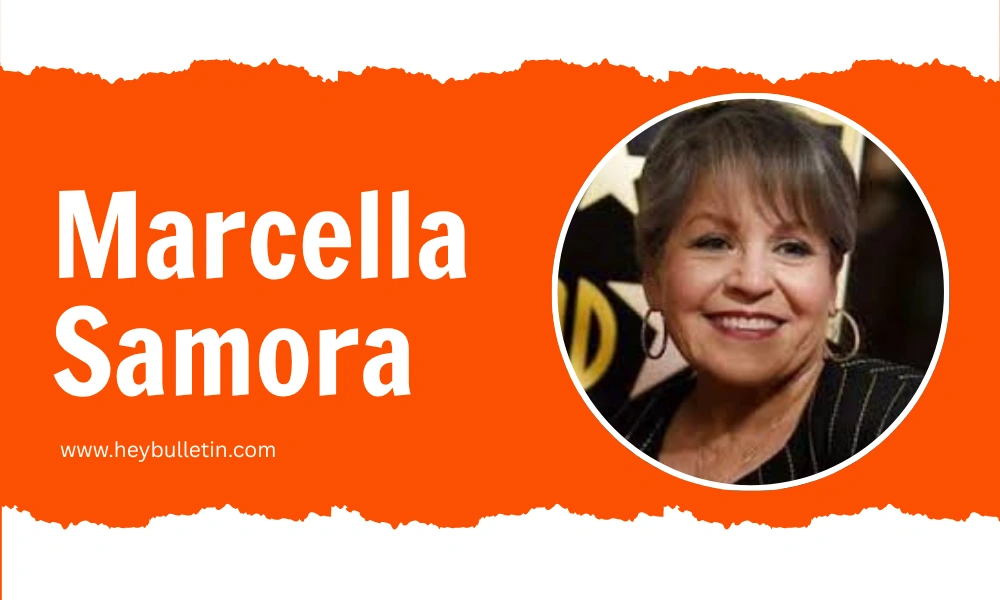
Marcella Samora isn’t a household name in the way her daughter is, and she never set out to be. She didn’t sing on stage with Selena y Los Dinos, she didn’t give interviews chasing the spotlight, and she has spent most of her life deliberately out of public view. But anyone who wants to understand Selena’s story in full, the family that shaped her, the discipline that built her career, and the grief that followed her death has to understand Marcella too. This post takes a closer look at who she is, where she came from, the family she built, and the quiet, determined way she has carried one of the most public tragedies in Latin music history.
Marcella Samora’s Early Life and Background
Marcella Ofelia Samora was born on July 17, 1944, in the United States. Her background is a blend of Mexican and Cherokee heritage, a mix that reflects the broader story of many families in the American Southwest whose roots braid together Indigenous and Mexican ancestry. Her father came from Amarillo, Texas, while her mother was originally from Colorado. That combination, a Texan father, a Coloradan mother, placed Marcella at a kind of crossroads from birth, part of two states and two cultural threads that would later show up in how she raised her own children.
Details about Marcella’s early upbringing and education are not widely documented. She has never been the subject of a memoir or a lengthy magazine profile focused solely on her childhood, and she has not filled in those gaps herself in public interviews. What is known is that at some point in her young adulthood, she made her way to Washington State, a move that would end up changing the entire trajectory of her life, because it’s where she met the man she would marry.
How Marcella Samora Met Abraham Quintanilla Jr.
While living in Washington, Marcella crossed paths with Abraham Quintanilla Jr., a young man who had been drafted into the U.S. military in October 1961. Abraham was stationed near Tacoma, at what was then known as Fort Lewis (today part of Joint Base Lewis-McChord). Military life had brought him far from his home in Texas, and it was there, far from either of their families, that he and Marcella found each other.
Their courtship led to marriage, and the couple exchanged vows on June 8, 1963. It’s worth pausing on the timeline here, because it says something about how quickly their life together took shape: within months of the wedding, the couple was expecting their first child. On December 13 of that same year, Marcella gave birth to a son, Abraham Isaac Quintanilla III, known to the world today as A.B. Quintanilla, producer, bassist, and the architect of much of the sound behind Selena y Los Dinos. Remarkably, Abraham Jr. received his discharge from active military duty on that very same day his son was born, as if the universe were closing one chapter of his life and opening another simultaneously.
Not long after, the young family relocated to Texas, settling into the region that would become the backdrop for their entire story, the Corpus Christi area, deep in the heart of Tejano culture. It was there that Marcella and Abraham welcomed two more children: a daughter, Suzette, who would go on to become the drummer for Selena y Los Dinos and later the president of Selena’s namesake foundation and museum, and finally, on April 16, 1971, their youngest daughter, Selena.
Marcella Samora and Building a Musical Family
Abraham Quintanilla Jr. had been a musician himself as a young man, singing with a doo-wop group called Los Dinos in the 1950s and ’60s. That group never achieved major commercial success, but it planted something in him that never really went away, a belief in music, in performance, and eventually, in his own children’s potential. As his kids grew older, he began giving them musical training, and it wasn’t long before he recognized something special, particularly in his youngest daughter’s voice.
Abraham formed a new version of Los Dinos, this time built around his three children, and Selena y Los Dinos was born. A.B. handled bass and production, Suzette played drums, and Selena, still just a child, became the group’s lead singer. While Abraham is usually credited as the driving force behind the group’s formation and business strategy, Marcella’s role, though less publicly documented, was foundational in a different way. She managed the day-to-day realities of raising three children who were also, increasingly, working musicians, the schooling, the road life, the domestic stability that let a young girl with an extraordinary voice grow up largely grounded, despite years of touring dance halls, quinceañeras, and eventually arenas across Texas and Mexico.
Marcella never performed with the group. She wasn’t on stage, and she isn’t the face people picture when they think of Selena’s rise. But behind almost every successful family act, a parent is managing the parts of life that don’t make it into the highlight reel, and by most accounts, that was Marcella’s role within the Quintanilla household.
Marcella Samora Watching Selena’s Star Rise
Through the late 1980s and into the early 1990s, Selena’s career transformed from a regional Tejano act to a genuine crossover phenomenon. She won a Grammy Award in 1994, released the massively successful album Amor Prohibido, and was on the verge of releasing an English-language crossover album that many believed would make her a mainstream American pop star on the level of any of her contemporaries.
For Marcella, watching her youngest daughter’s ascent must have been a complicated mix of pride and worry, the kind that comes with any parent watching a child step into a life so much larger and more public than anything the parent themselves ever experienced. Selena, newly married to Chris Pérez, the group’s guitarist, had opened a series of boutiques called Selena Etc., and was becoming not just a singer but a genuine businesswoman and fashion figure within the Latino community. Marcella watched all of this unfold as a mother, even as the world increasingly saw Selena as an icon.
Marcella Samora and the Tragedy of March 1995
That momentum, and the entire trajectory of the Quintanilla family’s life, was shattered on March 31, 1995. Yolanda Saldívar, the president of Selena’s fan club and manager of her boutiques, shot and killed Selena at a motel in Corpus Christi following a dispute over financial discrepancies. Selena was 23 years old.
The murder sent shockwaves through Texas, through Latin music, and eventually through the country at large, as it became clear just how significant a crossover star had been lost before she’d even gotten the chance to release the album that might have introduced her to an even wider American audience. For Marcella, the loss was, of course, immeasurably more personal than any of that. It was the loss of her youngest child.
Marcella Samora During the Trial
If the murder itself was devastating, the trial that followed asked something almost impossible of the Quintanilla family: to relive the details of Selena’s death publicly, in a courtroom, under intense media scrutiny, for weeks on end. Marcella did not handle this well, and it would be strange if she had. According to reports from that period, there were days during the trial when she reportedly couldn’t bring herself to get out of bed. On more than one occasion, the emotional weight of the proceedings became too much, and she had to be escorted out of the courtroom.
At one particularly difficult point, Marcella came close to fainting in court and was subsequently hospitalized after experiencing chest and arm pains tied to a sudden spike in her blood pressure. It’s a detail that, more than almost anything else, captures just how physically and emotionally consuming grief can become when it’s forced to play out in a public, adversarial setting like a murder trial. Saldívar was ultimately convicted of first-degree murder and sentenced to life in prison, a sentence she is still serving. But no conviction restores what was lost, and for Marcella, the trial’s end didn’t mean the end of the grief, only the end of one particularly brutal chapter of it.
Marcella Samora’s Life After Selena’s Death
In the years following Selena’s death, the Quintanilla family made a series of choices aimed at protecting and honoring her legacy rather than letting it be dictated entirely by tabloids, imitators, or people looking to profit off the tragedy. The family established Q Productions, and later, under Suzette’s leadership, opened the Selena Museum in Corpus Christi, a space where fans from around the world could see Selena’s costumes, cars, and personal items.
Marcella’s public presence during this period, and really in the decades since, has remained minimal by choice. She has largely stepped back from interviews and media appearances, allowing Abraham and Suzette to serve as the family’s more visible spokespeople when it comes to business matters, museum operations, and legal issues related to Selena’s estate, including the family’s long-running disputes with Saldívar over royalties and unauthorized merchandise. Marcella’s role has instead remained closer to what it always was: the emotional anchor of the family rather than its public face.
This isn’t unusual for parents who lose a child under such public and violent circumstances. Grief of that magnitude doesn’t necessarily lend itself to press conferences. For some people, healing, to whatever extent healing is even the right word for something like this, happens more through privacy than through public visibility. By most accounts, that has been true for Marcella.
Marcella Samora’s Private Life, Deliberately Kept That Way
One of the more striking things about researching Marcella Samora today is just how little verifiable personal information exists about her compared to other members of her family. She does not maintain official social media accounts, and any profiles bearing her name on platforms like Instagram or Facebook tend to be run by fans rather than by Marcella herself. This is a notable contrast to a media landscape where even relatively private family members of celebrities often end up with some kind of public-facing presence, whether by choice or necessity.
Instead, Marcella appears to have made a conscious decision to let her husband and daughter carry the public torch for the family’s business and philanthropic interests, including their continued work with the Selena Foundation, which supports causes tied to underprivileged children and communities in South Texas. She is, by all available accounts, still living, still connected to her family, and still almost entirely out of the spotlight by her own preference.
Why Marcella Samora’s Story Still Matters
It would be easy to reduce Marcella Samora’s story to a single sentence: she is Selena’s mother. And in the strictest factual sense, that’s true, it’s the reason her name appears in articles and biographies at all. But that framing sells short what her life actually represents. Marcella is a woman who built a life with a young military husband on the other side of the country from her own family, who helped raise three children who would go on to reshape an entire genre of music, and who then had to survive one of the most devastating things a parent can experience, in one of the most public ways imaginable.
Her story is also, in a sense, a story about a particular kind of resilience, one that doesn’t come with press releases or public statements, but shows up instead in the decision to keep showing up for family, for foundation work, for the quiet, ongoing task of preserving a daughter’s memory without turning grief itself into a performance. In an era where nearly every aspect of celebrity families gets picked apart online, Marcella Samora’s insistence on privacy is almost its own kind of statement.
Conclusion
Marcella Samora will likely never seek out the spotlight the way her daughter once commanded it so effortlessly, and that seems to be exactly how she wants it. But for anyone trying to understand the full picture of Selena Quintanilla, not just the icon on magazine covers and biopic posters, but the person who came from a real family with a real history, Marcella Samora’s story is essential. She is the mother who helped raise a Tejano legend, who endured an unimaginable loss in the most public way possible, and who, decades later, continues to hold her family and her daughter’s memory together with the same quiet strength she has shown since long before anyone outside of South Texas had ever heard the name Selena.
Her legacy may not come with Grammy Awards or platinum records, but it’s there all the same, in the museum that keeps her daughter’s memory alive, in the foundation that carries her name forward through charitable work, and in the family that, even after everything, has remained together. Ultimately, Marcella Samora’s life is a reminder that behind every public legend is a private family that lived, loved, and grieved far from the stage lights, and that her own quiet resilience is a legacy every bit as lasting as her daughter’s music.
Frequently Asked Questions
Who is Marcella Samora?
Marcella Samora is the mother of Tejano singer Selena Quintanilla-Pérez and the wife of Abraham Quintanilla Jr. Born Marcella Ofelia Samora on July 17, 1944, she is of Mexican and Cherokee descent and has largely stayed out of the public eye despite her daughter’s fame.
How did Marcella Samora meet Abraham Quintanilla Jr.?
The two met while Marcella was living in Washington State. Abraham had been drafted into the military and was stationed near Tacoma. They married on June 8, 1963, and had their first child, A.B. Quintanilla III, later that same year, before relocating to Texas.
Did Marcella Samora perform with Selena y Los Dinos?
No. Unlike her husband and children, Marcella never performed on stage with the family band. Her role was behind the scenes, managing family life while Abraham, A.B., Suzette, and Selena built the group’s career.
How did Marcella Samora react to Selena’s murder trial?
The 1995 trial of Yolanda Saldívar, who killed Selena, took a heavy toll on Marcella. Reports indicate she struggled to get out of bed on some days, was escorted out of the courtroom during emotional moments, and was hospitalized after nearly fainting due to a spike in blood pressure.
Does Marcella Samora have a social media presence, and where is she now?
Marcella does not maintain any official social media accounts; profiles using her name are typically run by fans, not by her. As of the most recent available information, she is alive, in her early 80s, and continues to live a private life away from the spotlight.
