

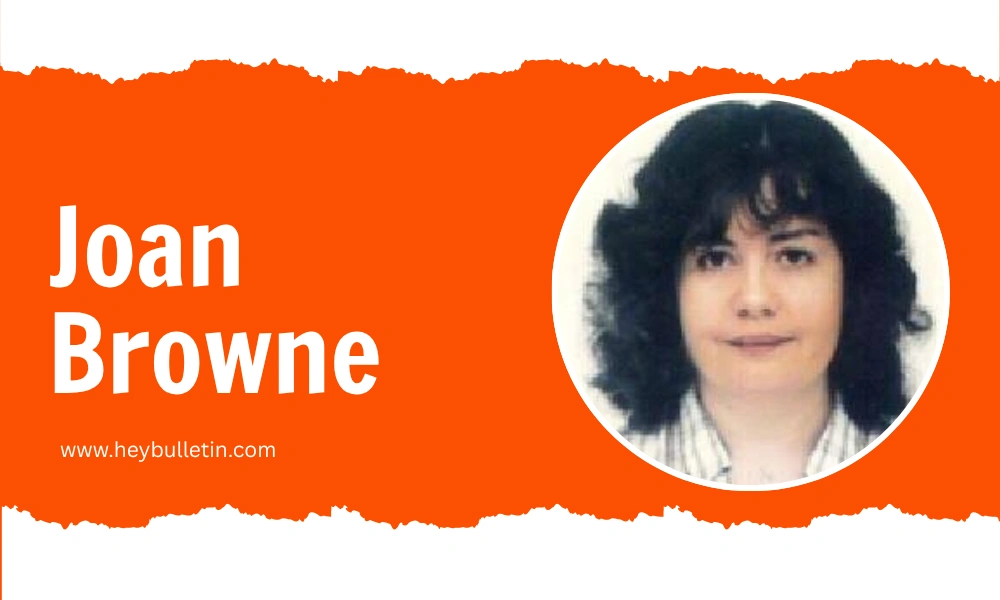
Joan Browne rarely appears in headlines on her own, yet her name surfaces again and again in the story of one of American television’s most enduring actors. As the first wife of performer Robert Alda and the mother of Alan Alda, best known for playing Hawkeye Pierce on M*A*S*H, Joan Browne occupied a quiet but formative place in the early years of a Hollywood family. Her life, largely lived out of the public eye, was shaped by beauty pageant glamour, a marriage to a rising entertainer, and a long struggle with mental illness that would later be described by her son in interviews and memoirs. This look at Joan Browne pulls together what is known about her early years, her marriage, her role as a mother, and the difficult chapter of her health that has come to define much of her public story.
Who Was Joan Browne?
Joan Browne was born Josephine M. Browne on June 24, 1908, in Pottsville, Schuylkill County, Pennsylvania, to Michael Francis Brown and Agnes Cecelia Dugan Brown. Some genealogical records list the family surname simply as Brown rather than Browne, and there is a minor inconsistency across sources about the exact spelling used during her childhood, so that detail should be read as approximate rather than firmly settled. She was raised in Pennsylvania in a family of Irish descent before relocating to New York, where her path eventually crossed with the world of entertainment.
It was in New York that Joan Browne won the title of Miss New York, a distinction that placed her, at least briefly, in the public eye well before her son became a household name. Beauty pageants in the early twentieth century served as one of the few visible platforms available to young women outside traditional domestic roles, and for Joan Browne, the title appears to have opened the door to the social circles of New York’s entertainment scene, where she would soon meet the man who became her husband.
Little is documented about Joan Browne’s life between her childhood in Pennsylvania and her arrival in New York, a gap that is fairly typical for private individuals of the period whose stories only become part of the historical record because of a later connection to someone famous. What can be inferred is that the move represented a significant shift, taking a young woman raised in a working-class Pennsylvania household into a city defined by ambition, performance, and rapid social change during the years leading up to the Great Depression. That backdrop matters because the entertainment world Joan Browne was entering in the early 1930s was itself in flux, with vaudeville giving way to new forms of stage and eventually screen entertainment, and with performers like the man she would soon marry constantly searching for their next opportunity.
Joan Browne Meeting and Marrying Robert Alda
Joan Browne married Alfonso Giovanni Giuseppe Roberto D’Abruzzo, an aspiring performer who would later adopt the stage name Robert Alda, on December 31, 1932. He built his professional name by combining the first letters of his first and last names, a small piece of show-business reinvention that would eventually become the surname carried by his more famous son. At the time of their marriage, Robert Alda was still working his way up through vaudeville, burlesque, and stage performances, a demanding and itinerant career that would shape much of the family’s early life together.
The couple had their only child on January 28, 1936, in New York City: Alphonso Joseph D’Abruzzo, who would grow up to become the actor, writer, and director known to the world as Alan Alda. For Joan Browne, motherhood arrived alongside the pressures of a husband whose career kept the family moving and whose work put him in proximity to the glamorous, and sometimes chaotic, world of touring performers.
The early years of the marriage unfolded during the tail end of the Depression, a period when steady work in entertainment was difficult to find and even harder to hold onto. Robert Alda’s path to stability was gradual, built through years of stage work before he eventually broke into film in the mid-1940s. For Joan Browne, this meant that much of her married life was spent supporting a household whose income and location could shift with each new booking, a reality that stood in sharp contrast to the more settled domestic life many of her contemporaries experienced. It is against this unstable financial and geographic backdrop that the more difficult chapters of her story, particularly her declining health, would later unfold.
Joan Browne on the Road and Raising Alan Alda
Joan Browne’s early years of motherhood coincided with a period of near-constant travel. Robert Alda’s performing schedule took the family across the country, and young Alan often accompanied his parents to venues where his father worked, occasionally appearing in the milder sketches of his father’s burlesque routines. This unconventional upbringing meant that Joan Browne was frequently managing a household in transit, without the stability of a fixed home or community, a circumstance that would have added strain to any marriage even without the health difficulties that were soon to emerge.
Compounding the family’s challenges, Alan Alda contracted polio at around age seven, a serious illness that required significant care and attention during a time when treatment options were limited, and the disease carried enormous fear for American families. Joan Browne, as the primary caregiver in the household, would have borne much of the responsibility for nursing her son through this period, even as her own health was beginning to deteriorate.
Joan Browne’s Mental Illness and Its Impact on the Family
The most widely discussed aspect of Joan Browne’s life is her struggle with severe mental illness, which multiple accounts describe as paranoid schizophrenia, though it is worth noting that this diagnosis stems largely from later recollections and secondhand reporting rather than from any medical record made public at the time. Alan Alda has spoken about his mother’s condition in interviews over the years, describing frightening episodes in which she experienced paranoid delusions, including the belief that people, at times even her own son, intended to harm her.
According to accounts Alan Alda has given, one of the most harrowing incidents occurred when he was around six years old: his mother, in the grip of a delusional episode, came at his father with a knife, and young Alan found himself in the position of having to intervene or protect his father from the threat. Alda has said that navigating his mother’s unpredictable moods taught him to read people closely and adapt quickly, a skill he later connected to his talent for improvisation as an actor. It is a striking detail, one that reframes a painful childhood experience as something that, indirectly, shaped his creative instincts.
Mental illness in the mid-twentieth century carried enormous stigma, and treatment options for conditions like schizophrenia were rudimentary at best, often involving institutionalization or medications with severe side effects. For Joan Browne, living with this kind of illness while also managing a household, a young child recovering from polio, and a husband whose career demanded constant public visibility would have been an extraordinarily difficult set of circumstances, made harder by the era’s limited understanding of psychiatric care.
The End of Joan Browne’s Marriage
The strain of Joan Browne’s illness, combined with the demands of Robert Alda’s career, eventually proved too much for the marriage to sustain. Most sources point to a divorce finalized in 1946, though this detail is not entirely consistent across the historical record. Some genealogical and newspaper-archive sources reference divorce proceedings occurring later, with court filings noted around 1955 and a divorce reported in early 1957, suggesting either a lengthy separation before a final legal divorce or some confusion between an initial filing and a later, formal dissolution. Given these discrepancies, the exact year the marriage legally ended should be treated as uncertain rather than a settled fact.
What is clearer is that the marriage’s end marked a significant turning point for the family. Robert Alda went on to marry Flora Marino in 1955, and the couple remained together until his death. Robert and Flora had a son, Antonio Joseph D’Abruzzo, known professionally as Antony Alda, born on December 9, 1956. Antony pursued acting as well, appearing in various film and television roles before his death from cirrhosis on July 3, 2009, at age 52. Robert Alda himself died on May 3, 1986, at age 72, following a stroke he suffered two years earlier, from which he never fully recovered.
Joan Browne’s Life After the Divorce
Detailed public information about Joan Browne’s life following her separation from Robert Alda is limited, which is unsurprising given that she was a private individual rather than a public figure in her own right. Unlike her former husband and her son, she did not pursue an entertainment career, and most of what is documented about her later years comes through the lens of her son’s recollections rather than independent biographical sources.
What can be said with more confidence is that Joan Browne died on September 28, 1984, in Los Angeles, California. It is worth flagging that at least one genealogical source contains a conflicting and difficult-to-verify note suggesting a different location for her death; given the inconsistency and lack of corroborating detail, the Los Angeles date and location should be treated as the more reliable reference point, while acknowledging that some ambiguity remains in the public record.
Alan Alda’s Reflections on His Mother
Over the course of his long career, Alan Alda has spoken with notable candor about his mother’s illness and its effect on his childhood, a choice that stands out given how rarely public figures of his generation discussed family mental health struggles openly. Rather than avoiding the subject, Alda has used interviews and his own writing to describe both the fear those experiences created and the ways they shaped his understanding of empathy and human behavior.
This openness has had a secondary effect: it has made Joan Browne’s story, difficult as it is, part of a broader public conversation about mental illness within families of that era. Her experience, filtered through her son’s reflections, offers a window into how conditions like schizophrenia were handled, or often mishandled, within households that had neither the medical tools nor the social support to manage them well. Alan Alda’s willingness to discuss his mother’s condition, rather than let it remain a source of quiet shame, has arguably given Joan Browne more public visibility posthumously than she had during much of her own lifetime.
Why Joan Browne’s Story Still Resonates
Joan Browne’s life intersects with several threads that continue to draw interest: the world of early twentieth-century beauty pageants, the itinerant lifestyle of Depression-era show business families, and the deeply personal, often painful subject of mental illness within a household later thrust into public attention through a famous son. She is not remembered for accomplishments of her own in the way her son or former husband are, but her presence in the Alda family’s history is undeniable, and her struggles have taken on a kind of secondhand significance through the honesty with which Alan Alda has discussed them.
There is also a broader pattern here worth noting: figures like Joan Browne, the private spouses and parents of celebrities, often exist in public memory only through fragments, secondhand accounts, and the occasional archival record. Piecing together her story means working with genealogical documents, brief newspaper mentions, and the recollections of family members decades after the fact, rather than a rich contemporaneous public record. That scarcity of primary documentation is part of why so many details about her life, from the exact year of her divorce to the precise nature of her diagnosis, carry some degree of uncertainty even now.
This same pattern shows up across many families connected to mid-century entertainment figures, where a spouse or parent who never sought public attention becomes historically visible only because of a relative’s later fame. Joan Browne’s case is somewhat unusual, though, in that the details which have surfaced are not simply biographical footnotes but genuinely formative elements of her son’s public identity. Alan Alda has referenced his mother’s illness often enough, and specifically enough, that it has become an established part of how audiences and journalists understand his personal history, even if Joan Browne herself never gave an interview or left behind a memoir of her own.
Joan Browne: A Life Defined by Both Glamour and Hardship
In many ways, Joan Browne’s story follows an arc common to women of her generation who brushed against fame without fully entering it. She began with a moment of public recognition as Miss New York, married into the world of professional entertainment, and became a mother during a period when family life and career ambition were tightly, sometimes uncomfortably, intertwined. What followed was not the glamorous trajectory her early pageant win might have suggested, but a far more difficult path shaped by illness, marital strain, and the quiet work of raising a child through serious hardship.
Her son’s success, first on Broadway and then through his decades-long run on MAS*H and his subsequent career as a writer, director, and science communicator, has kept Joan Browne’s name from disappearing entirely from the historical record, even as she herself remained a private figure. It is a common pattern in celebrity family histories: the parent remembered largely through the child’s recollections, with the fuller picture of her own inner life left mostly undocumented.
Conclusion
Joan Browne’s life resists easy summary. She was a beauty queen, a wife, a mother navigating serious personal and family hardship, and, according to her son’s own accounts, a woman whose mental illness profoundly shaped the household in which Alan Alda grew up. The available record, pieced together from genealogical archives, biographical sketches of her husband and son, and interviews Alan Alda has given over the decades, offers a partial but meaningful picture of a woman whose own story has largely been told through others.
What remains clear is that Joan Browne’s influence on her son, both through the instability of his early years and through the empathy he has said her illness taught him, played a real role in shaping one of American television’s most recognizable and respected actors. Her story is a reminder that the people standing just outside the spotlight often carry histories every bit as complicated as those who stand within it.
Frequently Asked Questions
Who was Joan Browne?
Joan Browne was a former Miss New York who became the first wife of actor Robert Alda and the mother of Alan Alda.
What was Joan Browne’s relationship to Alan Alda?
Joan Browne was Alan Alda’s biological mother, raising him through his early childhood, including his bout with polio.
Why did Joan Browne and Robert Alda divorce?
Their marriage ended largely under the strain of Joan Browne’s mental illness, combined with the demands of Robert Alda’s performing career.
How did Joan Browne’s illness affect Alan Alda?
Alan Alda has said navigating his mother’s unpredictable episodes taught him to read people closely, a skill he later linked to his ability to improvise as an actor.
Where did Joan Browne die?
Most records indicate Joan Browne died on September 28, 1984, in Los Angeles, California, though one source presents conflicting details.
