

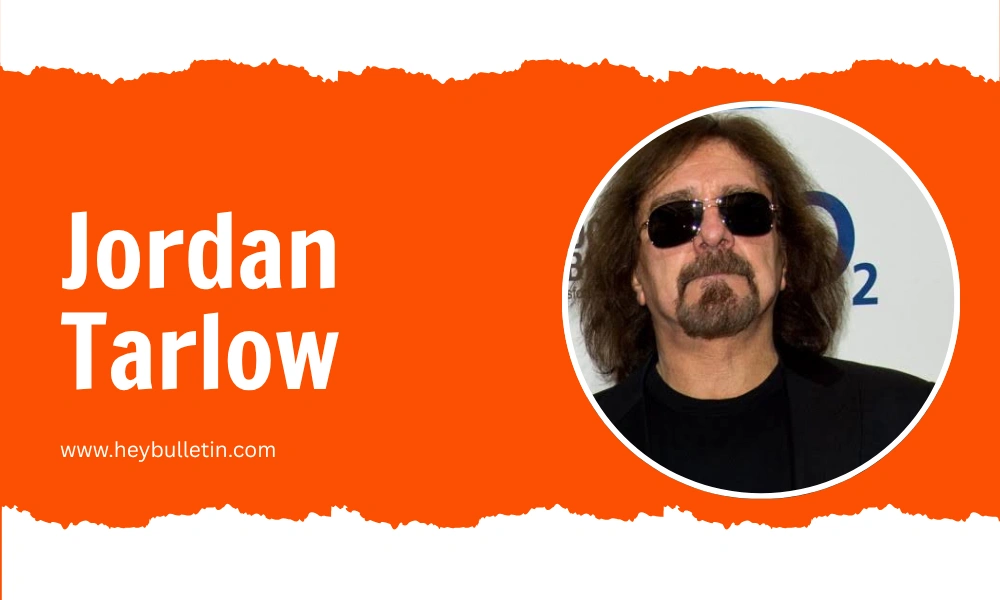
Jordan Tarlow belongs firmly in the second category. To garage rock enthusiasts, he’s remembered as the sharp-edged lead guitarist who helped power one of the genre’s most enduring bands. To pop culture followers, he’s known as the longtime husband of Martha Quinn, the original MTV VJ whose voice and face defined the early days of music television. Put those two threads together, and you get a portrait of someone who has spent decades contributing meaningfully to American music culture while deliberately avoiding the spotlight that so often accompanies it.
Who Is Jordan Tarlow?
Jordan Tarlow is an American musician, songwriter, producer, and recording engineer whose career runs through several corners of the underground rock world. He’s best recognized as a guitarist associated with the garage rock revival scene that took hold in the early-to-mid 1980s, a movement that pulled its energy from 1960s psychedelic and garage records and reintroduced that raw, fuzzed-out sound to a new generation of listeners.
Unlike many musicians who came up during that era, Tarlow has always maintained a private lifestyle, keeping details about his early life, personal background, and family largely out of the public eye. There’s no widely documented account of his childhood, his hometown, or his musical education. What is well documented, through album credits, band histories, and studio records, is the substantial body of work he built across nearly two decades of active recording and performing.
Jordan Tarlow’s Roots in the Garage Rock Scene
Jordan Tarlow’s public musical footprint starts in the New York rock underground of the early 1980s. According to firsthand recollections tied to the era, he was playing guitar in his teenage years and running in social circles that would eventually produce several notable regional bands. One account describes him being introduced to vintage garage and psychedelic records, groups like The Litter, Creation, and the 13th Floor Elevators, during high school, an experience that reportedly shaped the aesthetic he’d chase for the rest of his career. Not long after, he found himself connected to short-lived outfits with names like Disturbed and The Tryfles, part of the loose, fast-moving network of teenage bands that defined the garage revival’s earliest days.
By 1983, Tarlow was playing guitar and working as an engineer for a group called The Outta’ Place, contributing to a promotional demo that same year and to the full release We’re Outta Place the following year. That period reflects the hallmark of the scene he was part of: bands forming quickly, borrowing members from one another, playing dive bars, and self-producing recordings on shoestring budgets, all in service of a raw, retro sound that stood in contrast to the polished synth-pop dominating the charts at the time.
Jordan Tarlow’s Discography: Producer, Engineer, and Multi-Instrumentalist
What separates Jordan Tarlow from many of his garage rock peers is the sheer range of roles he took on. Session and credit databases list him as a guitarist, producer, engineer, keyboardist, and programmer across more than twenty recorded performances. That range says something important about how he approached music, not just as a performer chasing a stage presence, but as a craftsman interested in how a record actually gets made.
Some of the more notable credits from this stretch of his career include:
- The Vipers – Outta the Nest! (1984), Tarlow served as producer on this release, one of several notable entries from New York’s garage revival scene.
- Frosted Flakes – Waste Your Time (1984). Here, he took on guitar, songwriting, and production duties, reflecting a hands-on role in shaping the final sound of the record.
- The Morlocks – Emerge (1985), Tarlow worked as engineer and producer, lending his production sensibilities to a band that became a notable name within the same broader revival movement, albeit from the West Coast garage scene.
- The Fuzztones – One Girl Man (1998). By the late 1990s, Tarlow was contributing guitar and production work to The Fuzztones, the band with which his name is most closely associated.
- Tone-Bender (2003), A later solo-style credit lists Tarlow handling lead vocals, guitar, theremin, production, recording engineering, and mixing, essentially a one-man operation showcasing the full scope of his studio skill set.
He’s also recorded under the alias Nadroj Wolrat, his own name spelled backward, a small but telling detail that fits the DIY, self-effacing spirit of the scene he came up in.
Jordan Tarlow and The Fuzztones Years
If there’s one credit that defines Jordan Tarlow’s musical identity, it’s his time with The Fuzztones. The Fuzztones is an American garage rock revival band formed in 1982 by singer-guitarist Rudi Protrudi in New York City. After the original lineup broke up, Protrudi relocated to Los Angeles in 1987 to rebuild the band. That reconstituted lineup is where Tarlow made his mark, stepping in as lead guitarist alongside a cast of players rounding out the group’s classic garage sound, fuzzed guitar tones, Vox combo organ, driving rhythm, and a theatrical stage presence steeped in 1960s psychedelia.
The Fuzztones became one of the flagship acts of the garage rock revival, a movement that also intersected with the Paisley Underground scene happening in parallel on the West Coast. The band toured extensively, building a following not just in the United States but internationally, with notable touring runs through Europe and Canada, regions where garage rock and psychedelic revivalism found particularly enthusiastic audiences. For a guitarist, that kind of touring schedule is often the true test of a career: not the studio polish, but the ability to deliver the sound night after night in front of unpredictable crowds. Tarlow’s tenure in the band placed him at the center of that experience during a formative chapter of the group’s history.
His involvement with the Fuzztones extended well beyond touring, though. His guitar and production credit on One Girl Man in 1998 shows that his relationship with the band continued long after the peak years of the garage revival, underscoring a long-term creative partnership rather than a brief stint.
Jordan Tarlow’s Life After the Touring Years
Jordan Tarlow’s music career didn’t stop when the garage revival’s commercial visibility faded in the broader marketplace. He kept working in production and engineering roles, a natural evolution for a musician whose skill set always extended beyond simply playing guitar. One clear example of this later chapter is his involvement in designing and running a home recording and broadcast studio, described in industry write-ups as a space built for both music production and live radio work.
That studio project involved Martha Quinn, described as MTV’s original VJ and a Sirius XM satellite radio personality, and Tarlow, credited as a show producer, engineer, and composer, along with his history as a Fuzztones lead guitarist. The design centered on smooth traffic flow through the space, with a storage area at one end and an entry vestibule doubling as a separately conditioned equipment room at the other, while the control room was built to host live interviews and performances as well as multi-guest broadcast setups.
That detail is worth sitting with for a moment, because it captures something essential about Tarlow’s career arc: a musician who started out playing dive bars and self-produced garage rock records eventually built out a professional-grade studio blending music production with live broadcast capability. It’s the kind of quiet evolution that rarely makes headlines but reflects real, sustained investment in a craft.
Jordan Tarlow’s Marriage to Martha Quinn
Much of the broader public interest in Jordan Tarlow today stems from his marriage to Martha Quinn, one of the five original MTV VJs who became a defining face of the network’s early years. Quinn’s career took off in the 1980s as MTV redefined how audiences consumed music and celebrity, and she remained a recognizable presence in radio and media in the decades that followed, including her work in satellite radio.
Tarlow and Quinn have been married since 1992, a union that has now lasted more than three decades, a notably long run by entertainment industry standards. The two have made their home in Malibu, California, where they built the studio space referenced above and where Quinn continued her radio and media work. Various accounts speculate that the couple’s paths first crossed through overlapping music and entertainment circles, which lines up neatly with Tarlow’s own career in bands and studio production during the same general period.
What’s consistent across virtually every account of their relationship is the emphasis on privacy. Despite Quinn’s public profile, the couple has kept the details of their personal life, family matters, their day-to-day routines, and the specifics of how they met largely out of interviews and press coverage. That’s a deliberate choice, and one that stands out in an era when celebrity relationships are often mined for content.
Jordan Tarlow: A Career Defined by Privacy
It’s worth pausing on just how consistently Jordan Tarlow’s privacy shows up as a theme across every source that covers him. There’s no confirmed birth date circulating publicly. There’s no widely available account of his parents, siblings, or educational background. There’s no verified figure for his net worth, despite plenty of speculative estimates floating around online, estimates that should be treated with real skepticism given the total absence of any confirmed financial disclosures.
This isn’t a case of a musician whose personal details were simply never documented by an inattentive press. It reflects a consistent, evidently intentional choice by Tarlow to keep his life outside the studio and outside the marriage largely private, even as interest in his story has grown specifically because of his connection to a famous spouse. In a media landscape that tends to reward oversharing, that kind of consistency is unusual, and arguably admirable.
Why Jordan Tarlow’s Story Still Resonates
There are a few reasons people continue to search for information about Jordan Tarlow, and they say something interesting about what audiences find compelling in a story like his.
First, there’s the music itself. The garage rock revival of the 1980s is a genuinely important, if under-covered, chapter in American rock history. It helped keep the raw energy of 1960s garage and psychedelic rock alive at a moment when the mainstream was moving in a very different direction, and it laid the groundwork that later influenced subsequent waves of garage and lo-fi revivalism. Musicians like Tarlow, who moved fluidly between performing, songwriting, and production across multiple bands, were part of what made that scene functional, not just performers, but the connective tissue that helped smaller, DIY-minded bands actually get their records made.
Second, his marriage is durable. In an industry where high-profile relationships often end up as tabloid fodder, a three-decades-plus marriage between a famous media personality and a working musician who mostly stays out of frame is genuinely noteworthy. It offers a counter-narrative to the assumption that fame and stability can’t coexist.
Third, there’s the appeal of the low-profile creative life. Not every musician wants, or needs, mainstream celebrity to have a meaningful career. Tarlow’s trajectory, from teenage garage rock guitarist to touring Fuzztones member to studio producer and home-studio designer, is a portrait of sustained creative engagement without the trappings of fame. For anyone weighing what a successful music career actually looks like, that’s a useful example to consider.
Conclusion
Jordan Tarlow’s career doesn’t fit neatly into a single box. He’s a guitarist who helped define a specific era of American garage rock, a producer and engineer who shaped records across multiple bands and decades, and a studio architect who built out professional recording and broadcast space later in his career. He’s also, unavoidably, in the eyes of much of the public, the husband of one of MTV’s most recognizable original faces.
What makes his story worth telling isn’t scandal or spectacle; it’s the opposite. It’s a reminder that meaningful creative work and a stable personal life don’t require public visibility to be real or significant. Jordan Tarlow built a career on craftsmanship: tight guitar work, careful production, and studio engineering that let other artists’ music come through clearly. That kind of contribution rarely trends on social media, but it’s the kind of work that keeps entire music scenes running. Decades after the garage rock revival first roared to life, that legacy is still worth recognizing.
Frequently Asked Questions
1. Who is Jordan Tarlow?
Jordan Tarlow is an American guitarist, songwriter, producer, and recording engineer best known for his work in the garage rock revival movement of the 1980s. He has contributed to several bands as both a musician and a producer, earning recognition for his behind-the-scenes work as well as his guitar performances.
2. Is Jordan Tarlow married to Martha Quinn?
Yes. Jordan Tarlow has been married to Martha Quinn, one of the original MTV VJs, since 1992. The couple has maintained a long-lasting marriage while keeping their personal life largely private.
3. What band is Jordan Tarlow best known for?
Jordan Tarlow is most closely associated with The Fuzztones, a pioneering garage rock revival band. He served as lead guitarist and also contributed as a producer, helping shape the band’s signature psychedelic garage rock sound.
4. What does Jordan Tarlow do besides playing guitar?
In addition to performing, Jordan Tarlow has worked extensively as a producer, recording engineer, mixer, songwriter, and composer. He has also been involved in designing and operating professional recording and broadcast studios, supporting both music production and radio programming.
5. What role did Jordan Tarlow play in the garage rock revival?
Jordan Tarlow contributed to the 1980s garage rock revival as a guitarist, producer, and recording engineer. Through his work with bands such as The Fuzztones, The Vipers, and The Morlocks, he helped preserve and promote the raw, psychedelic-influenced sound of 1960s garage rock for a new generation of listeners.
